
A business, draw out of one person’s head.
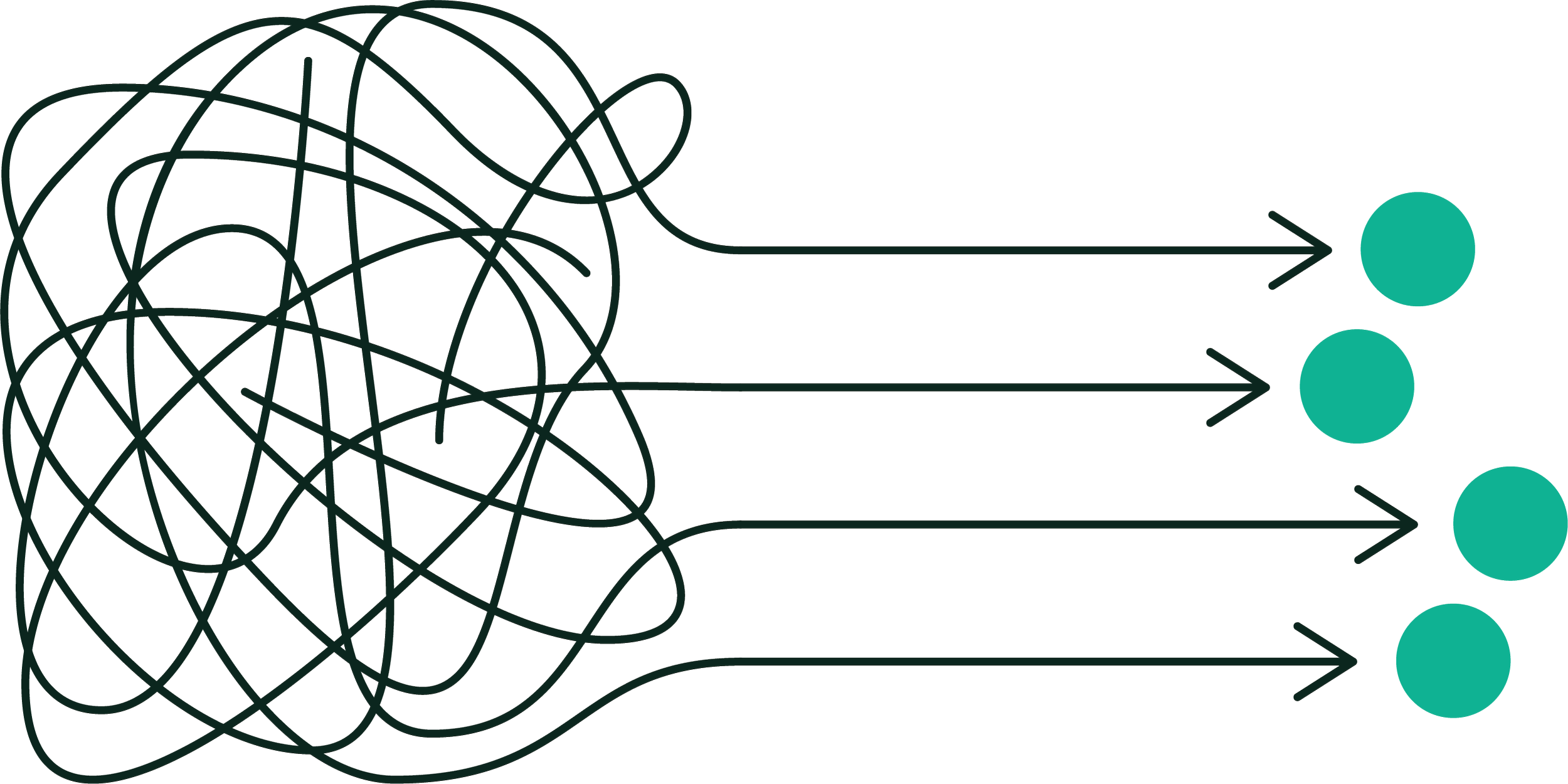
She had the intention. She needed to see it, so she could know where she stood and where to go next.
The situation how the client experienced it.
The client had just qualified as a coach and possessed every technical tool required to practice. What she did not have was a business built around her practice.
She was carrying a complete mental model alone in her head, resulting in total execution paralysis:
No clear positioning to communicate to the market.
No core message to use for outreach.
No digital storefront or website to point people toward.
No structured framework to explain to a prospect what working with her would look like.
She knew what she wanted to build, but without an execution plan, she didn't know where to start.
What I actually did.
The brief was to help put the business together. Underneath that, the real job was to extract the chaotic ideas from her head and give them a tangible form she could examine from the outside.
The Diagnostic Nudge: We started with a conversation to uncover the visible grey areas. I then prepared a targeted questionnaire. Its purpose wasn't just to collect data—it was to give the founder permission to look at her own idea from entirely new angles.
The First Map: With her answers, I laid the entire business flat on a single page. This allowed thoughts that had lived as isolated pieces to finally be seen in relation to one another.
The Interactive Session: We ran a intensive two-hour, one-on-one working session against that map. She clustered related ideas, merged duplicates, and refined the structure. My job in that room was to hold the pen and hold the map—ensuring every flash of clarity ended up on the page rather than slipping back into her head.
The reference I built.
Following our session, I organised the map into a pristine reference system and used it as the source for three distinct operational layers:
Layer 1: The Structured Business Plan. I translated her thinking into a formal blueprint covering everything from positioning and service design to core operations.
Layer 2: The Resource Inventory. A highly realistic assessment of what she wanted to invest her own time in versus what she needed to delegate. For a solo founder, knowing your limits is part of the plan—not a footnote.
Layer 3: The Downstream Assets. This blueprint directly anchored the launch phase. Because she was starting from zero, I executed the full package: the website, brand identity, and print collateral.
Note: While full-scale asset production is no longer the core focus of my practice, this project proved that when the reference map is right, everything downstream becomes a straightforward execution task rather than a series of design decisions in the dark.
What changed after.
The client walked out of the engagement with a business she could physically see.
Strategic Assets: She possessed a co-written plan, a clear target audience, and the physical assets needed to go to market on day one.
Sales Confidence: She gained the deep confidence that comes from thinking a business through on paper before defending it in a sales conversation.
A Shift in Stance: When founders arrive at their first prospective meetings with a definitive reference in hand, they are no longer selling from memory—they are pointing at something.
What I learned.
This engagement settled the question of what I actually do. Every business, service, or idea starts as a fuzzy mental image inside someone's head. Left there, it slows down, and every subsequent decision—the site, the brand, the pricing—is made in a fog.
Extracting that picture and laying it flat is the step that makes every other step possible.
Whether a leader is at day zero or commanding a division inside a global organisation, the mechanism is identical: give them a shared picture they can point at, and the fuzz lifts. Clarity is not a nice-to-have at the start of a business. It is the first asset.